Tunisia travel guide for visitors and digital nomads
Beaches, ancient ruins, medinas and the Sahara, all within a short flight of Europe. Practical guides for holidays and for remote work.
Browse the guides Working remotely?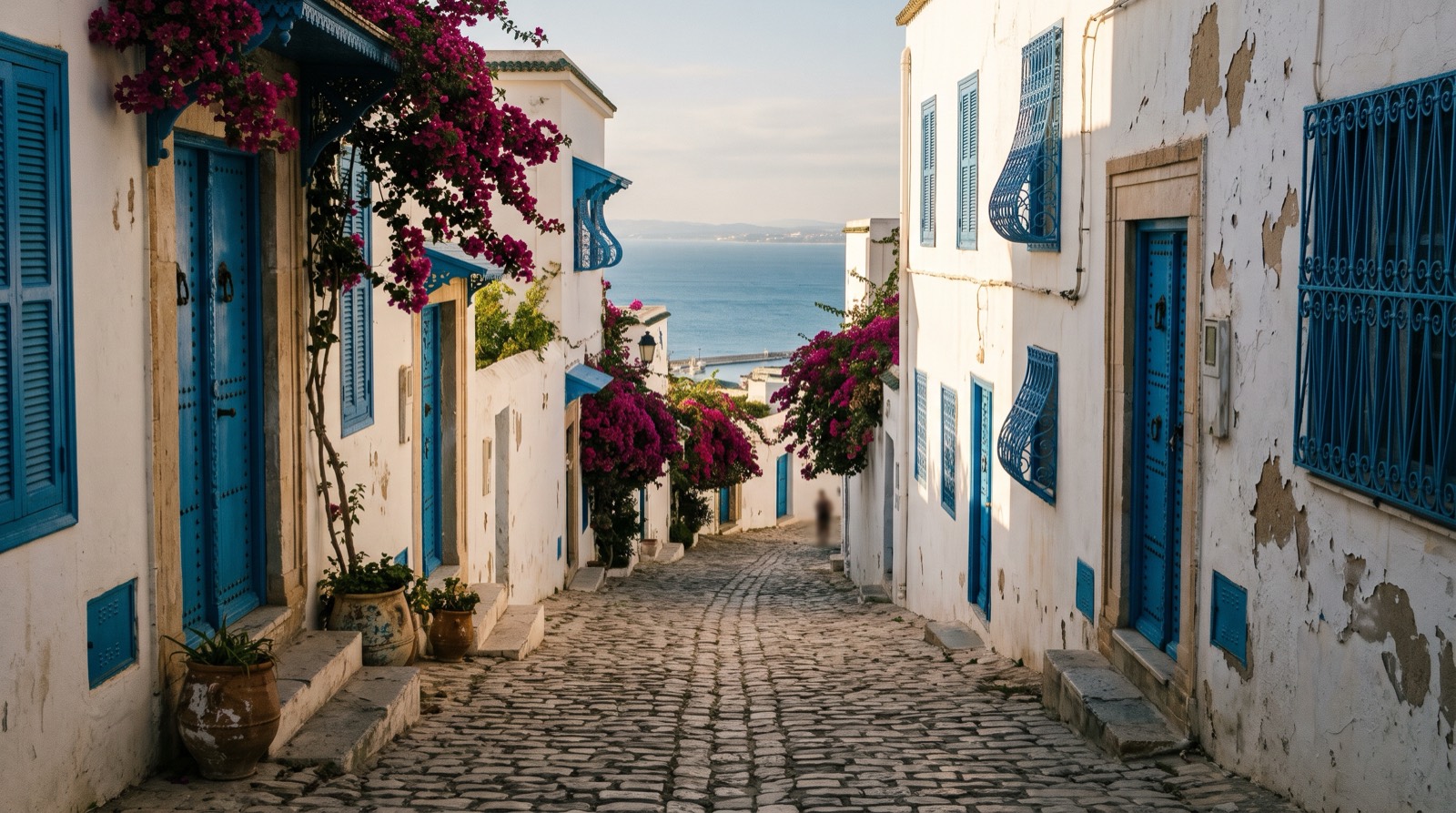
Tunisia travel guides
Pick a destination or topic. Each guide covers what to see, how to get there and practical tips.
Tunis & Carthage
The medina, Bardo Museum, Carthage ruins and Sidi Bou Said.
Read the guide →Djerba
Calm beaches, pottery, street art and island life.
Read the guide →Sousse & Hammamet
Sandy beaches, walled medinas and easy day trips.
Read the guide →Sahara, Douz & Tozeur
Dunes, palm oases, salt lakes and mountain oases.
Read the guide →Digital nomads
Where to base yourself, internet, SIM cards and time zone.
Read the guide →Visa & entry
Who needs a visa, entry basics, money and customs.
Read the guide →Tunisian food
Brik, couscous, lablabi, harissa and sweets to try.
Read the guide →Best time to visit
Weather and seasons for the coast, cities and Sahara.
Read the guide →Getting around
Trains, louages, buses, taxis, car rental and flights.
Read the guide →SIM cards & internet
Which operator to pick, where to buy and what to expect.
Read the guide →Cost of living
Budgeting for rent, food, transport and daily life.
Read the guide →Safety tips
Staying safe, common scams, health and women travellers.
Read the guide →Kairouan & El Djem
A holy city and one of the best Roman amphitheatres.
Read the guide →Frequently asked questions
Is Tunisia safe for tourists?
Most tourist areas such as Tunis, Sousse, Hammamet and Djerba see many visitors every year. Use normal precautions, avoid border and remote areas flagged by your government, and check your country's latest travel advice before you go.
Do I need a visa for Tunisia?
Many nationalities, including most EU countries, the UK and the US, can enter without a visa for short stays, typically up to 90 days. Rules change, so confirm with the Tunisian embassy or your government's travel page before booking.
What is the best time to visit Tunisia?
April to June and September to October are the most comfortable months, with warm weather and swimmable seas. July and August are very hot, especially in the south.
What currency is used in Tunisia?
The Tunisian dinar (TND). It cannot be taken out of the country, so spend or exchange it before you leave. Cash is widely used outside resorts.
Can you work remotely from Tunisia as a digital nomad?
Yes. Tunis, La Marsa, Sousse, Hammamet and Djerba have cafes, coworking spaces and mobile 4G. Tourist stays are limited in length, so check the current rules for long stays.